
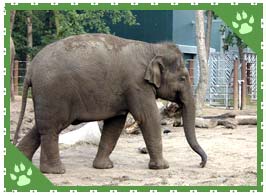
 Elephants are one of the most fascinating and wonderful animals on the surface of earth. Elephants are commonly found in Africa and Asia with the former larger in size. For centuries, elephants have been used as beasts of burden and generated curiosity and awe among human beings. We all want to know more and more about elephants. Asian elephants differ from their African counterparts by their smaller size, smaller ears, rounded back and a fourth toenail on each of their hind feet. The Asian/ Indian elephants have a thick and dry skin with small amount of hair and are grey to brown in color. It is important to note that female Asian elephants have rudimentary tusks. Find out more interesting facts on elephants.
Home » Indian Elephant » Facts on Elephant
Facts on Elephant
Elephants are one of the most fascinating and wonderful animals on the surface of earth. Elephants are commonly found in Africa and Asia with the former larger in size. For centuries, elephants have been used as beasts of burden and generated curiosity and awe among human beings. We all want to know more and more about elephants. Asian elephants differ from their African counterparts by their smaller size, smaller ears, rounded back and a fourth toenail on each of their hind feet. The Asian/ Indian elephants have a thick and dry skin with small amount of hair and are grey to brown in color. It is important to note that female Asian elephants have rudimentary tusks. Find out more interesting facts on elephants.| Subspecies: | E.m.maximus, E.m.indicus, E.m.sumatranus. |
| Life span: | Asian elephants live for about 70 years |
| Body Length: | 5.5-6.40m |
| Shoulder Height: | 2.5-3m |
| Weight: | Male: 5000kg, Female: 3000kg, |
| Tail Length: | 1-1.3m. |
| Distribution: | India, Sri Lanka and further south and east as far as Sumatra |
| Habitat: | Asian elephants are spread over areas where rainfall levels vary considerably. They can survive in dry places where less than 40cm of rain falls per year, and in wet areas where over 8m of rain can fall in a year. |
| Diet: | Vegetarian diet including grasses, bamboo, bark, succulent climbers, legumes, creepers and palms. |
| Behavior: | Asian elephants are sociable and live in basic family units of one adult cow and her offspring. |
| Reproduction: | Give birth to one calf after a gestation period of 18-22 months (every three to four years). |
| Conservation Status: | Asian elephants are classified as Endangered |

