

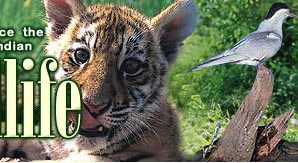

The vast size of India and different climatic conditions has resulted into a wealth of more than 80 National Parks and 441 plus wildlife sanctuaries. Many of the present wildlife sanctuaries and national parks were private hunting reserves of the erstwhile Indian aristocracy. Though the National parks and wildlife sanctuaries are home to a large number of wildlife but individual parks and sanctuaries are better known for a particular animal/species. Thus, Gir national park (Gujarat) is famous for its Asiatic lions, the Indian rhinoceros is the pride of Kaziranga (Assam) and elephants steal the show in Periyar (Kerala) whereas tigers are synonymous with Kanha (Madhya Pradesh) and Bandavgarh (Madhya Pradesh). The mangrove forests of Sunderbans National park are the unique habitat of the Royal Bengal Tiger.
The National parks and wildlife sanctuaries, spread across all parts of India, are thus a living museum of nature's creations with a variety of animals, plants, landscapes and rock formations. For a wildlife enthusiast India is a place to be in as the country offers diverse flora and fauna, which is hardly found together in any other part of the world. With over 15,000 species of plants, 500 species of reptiles and amphibians, 2000 species and sub-species of birds, some 30,000 insect species, about 410 species of mammals India is definitely a wildlife lover's paradise. Here, it is important to note that spotting of wild animals depends greatly on their habit and distinct daily and seasonal patterns of activity. The frequency of wildlife sightings in national parks and wildlife sanctuaries varies depending on the time of the year.
India Wildlife » India Wildlife Sanctuaries

